What it is
A system that moves sites from brief to deploy, connecting strategy, content and publishing.
How it works
The product turns every relevant decision into a typed, versioned and approvable artifact. AI can generate proposals, drafts, diffs and validations, but it cannot approve or publish by itself.
Once the key artifacts are approved, the system can generate a real Next.js, Payload and Puck project. Regeneration is governed: it only touches generator-owned files, detects conflicts and leaves the final decision to the team.
Learnings
AI accelerates production when it proposes, documents and teams keep control.
State
Complete MVP, runnable locally. The repository documents the end-to-end flow, from project creation to generation, visual editor, review, release, local deploy and agent runtime.
Problem it solves
Many agencies already use AI to speed up production, but the work often becomes fragmented across prompts, documents, visual tools, repositories and decisions that are hard to audit.
Agency Workstation proposes a different model: a system where AI works inside a governed production cycle. Every important output is structured, versioned, reviewable and connected to the next step in the project.
Product architecture
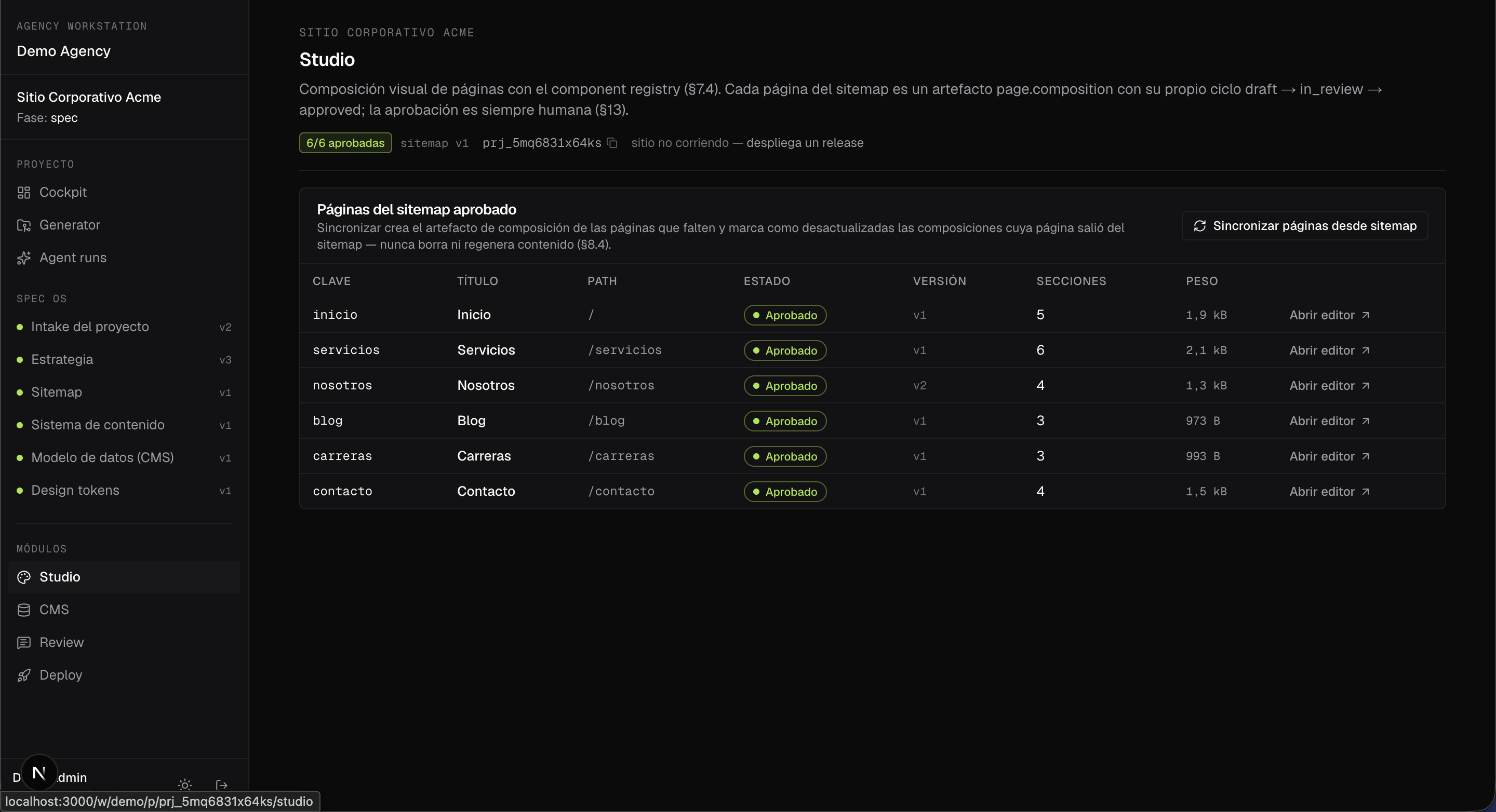
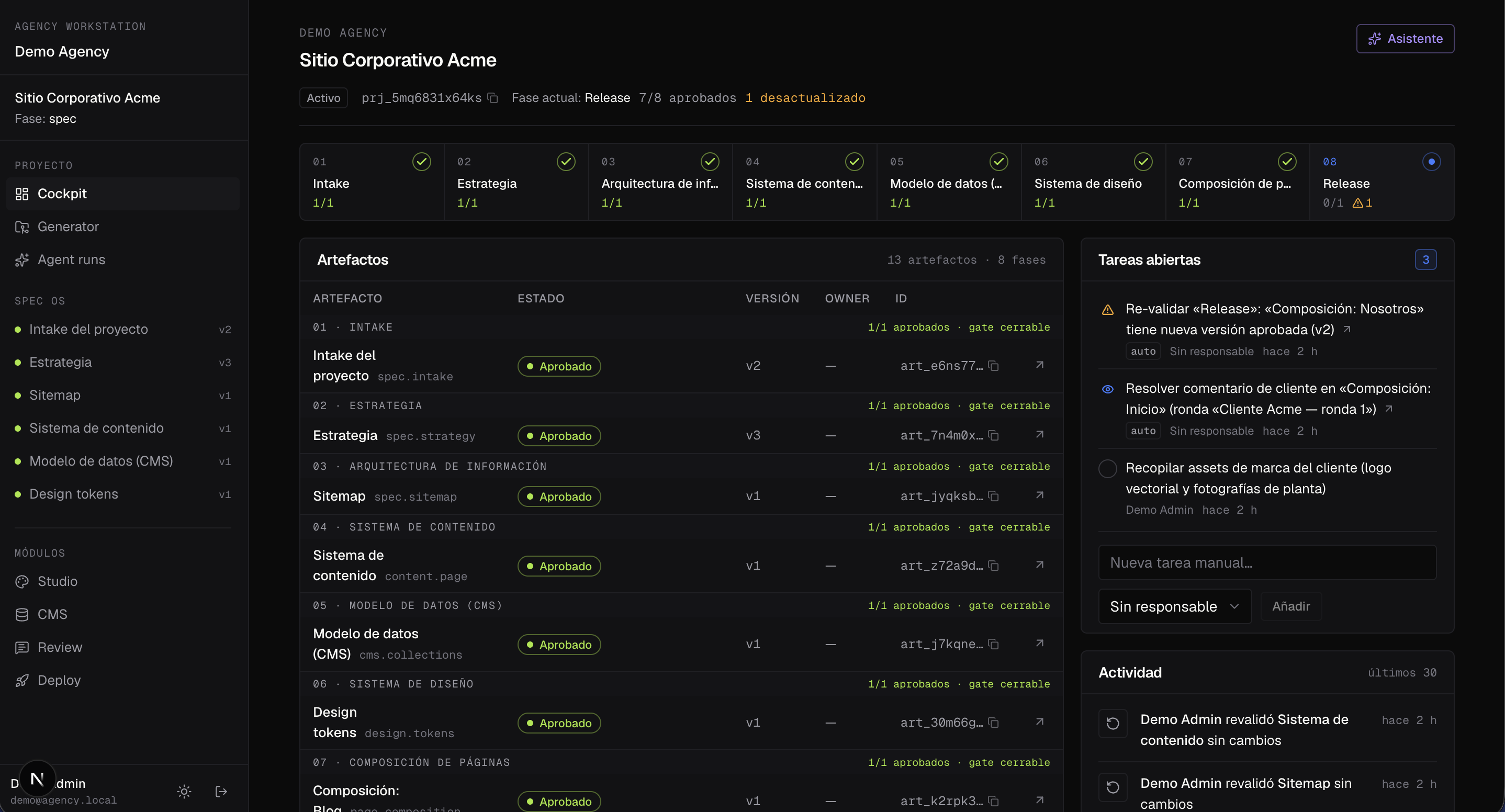
The platform organizes the project around artifacts: intake, strategy, sitemap, design tokens, CMS model, copy, page compositions and releases.
Each artifact has a validated payload, editorial state, immutable versions, structural diff and explicit dependencies. If an input changes, the system marks what becomes outdated, but it does not regenerate blindly.
AI with human governance
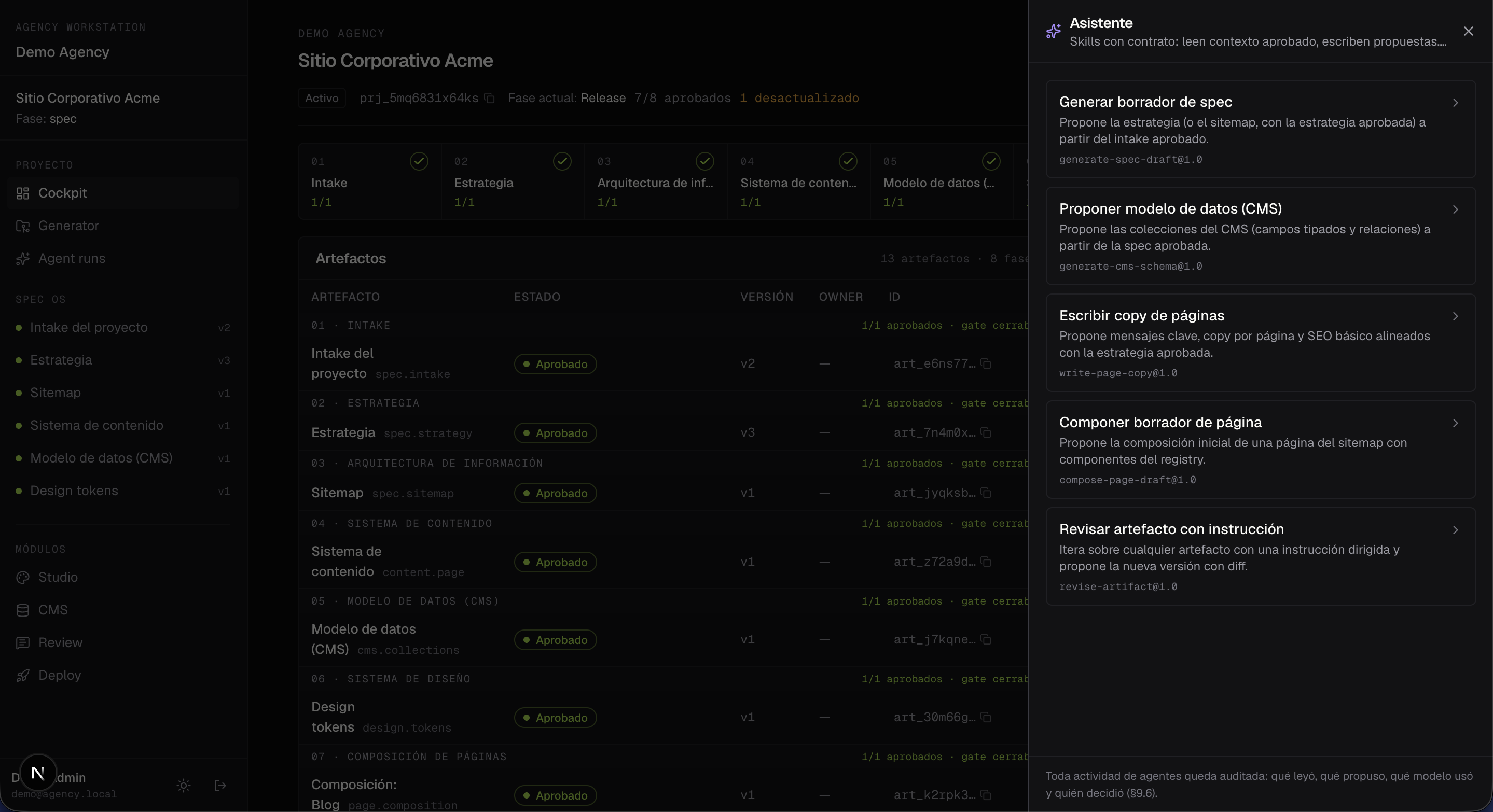
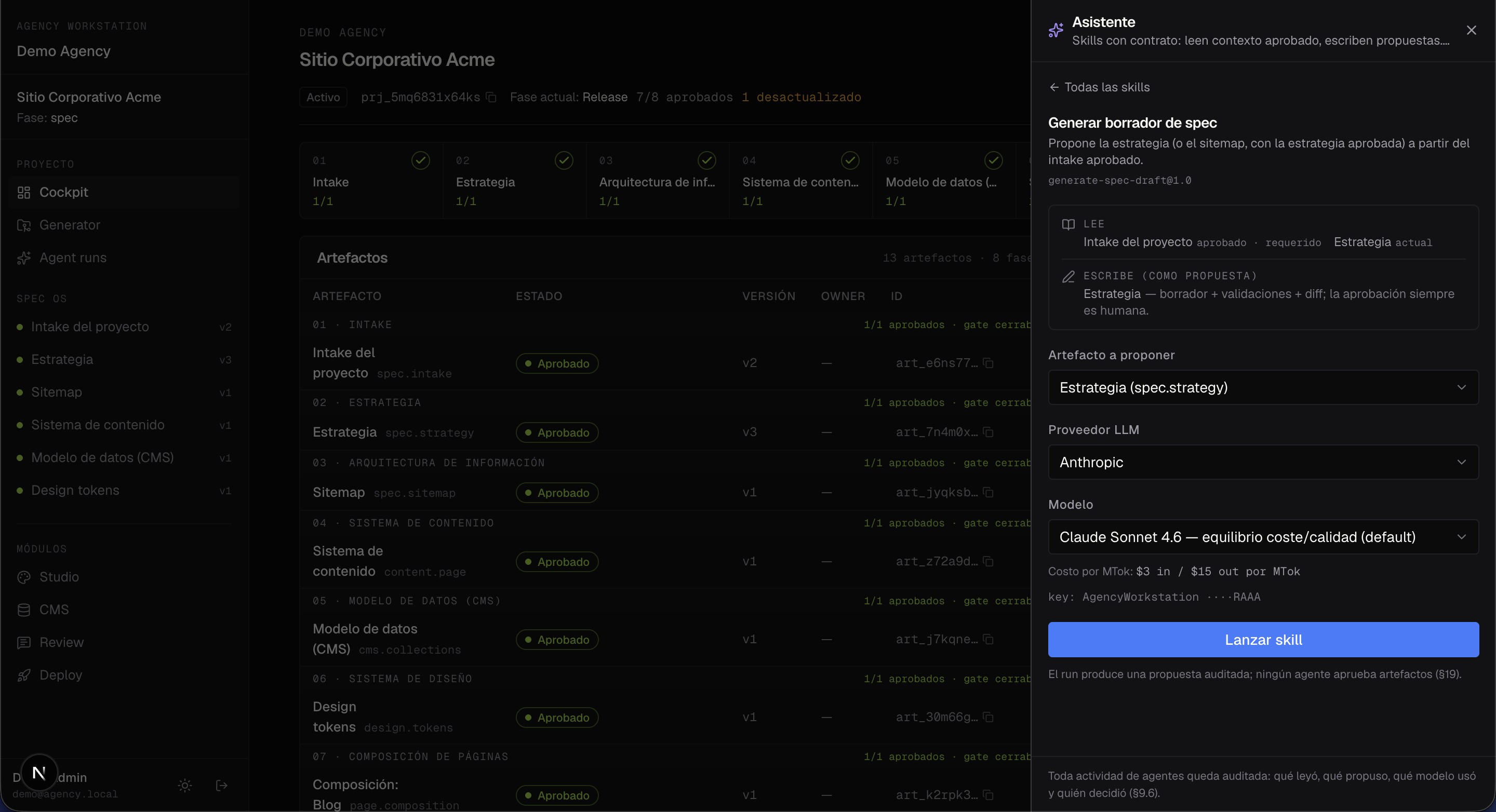
The assistant works as a contextual layer. It can read the approved state of the project, propose changes, run closed-list skills and leave drafts ready for review.
The central rule is simple: AI proposes, the team decides. No flow allows an agent to approve artifacts, publish releases or resolve conflicts without an explicit human action.
Visual Studio, CMS and composition
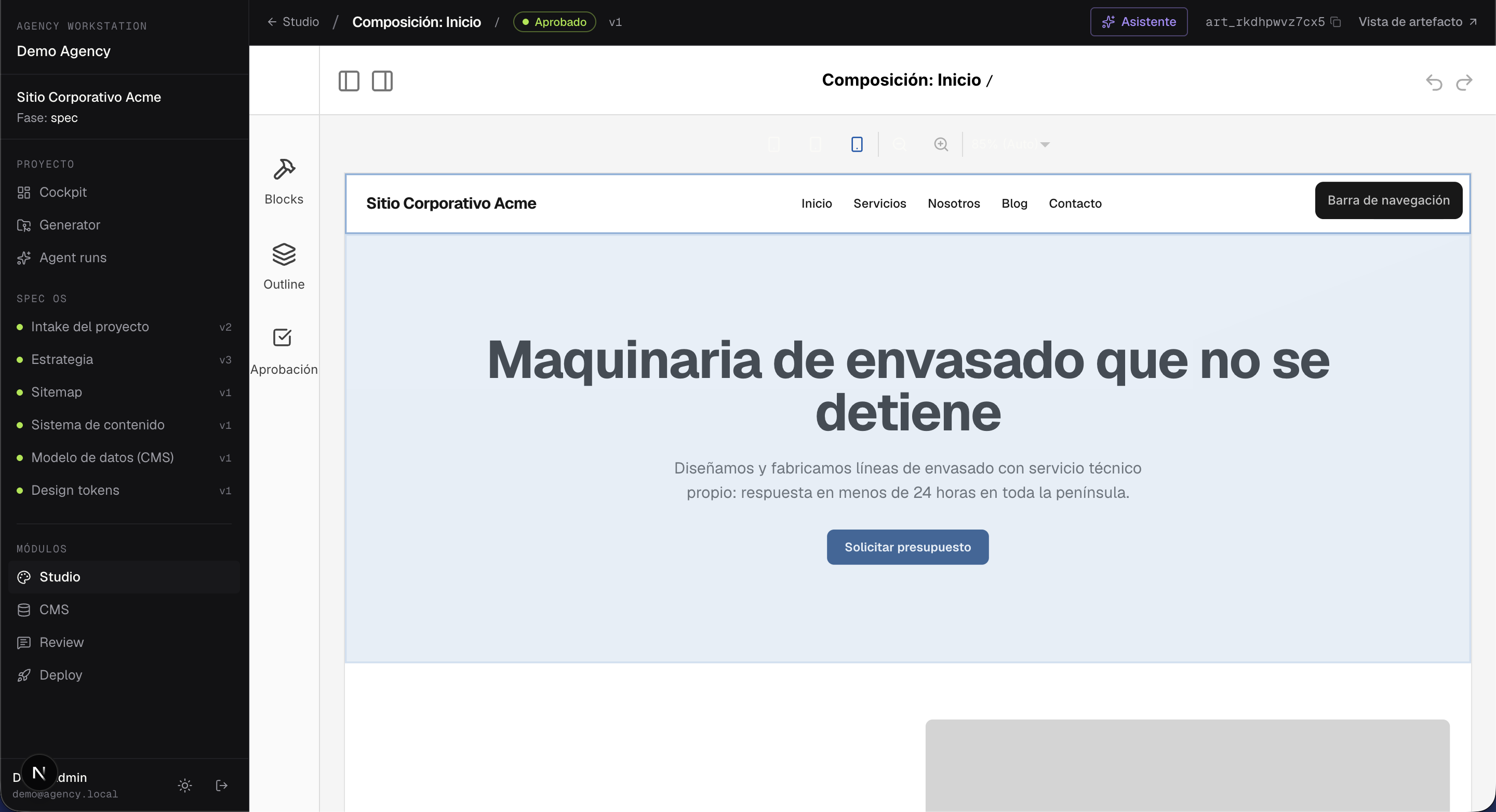
The visual editor integrates Puck over composition artifacts. This enables page editing through a visual experience without breaking the system contract: the composition remains validated, versioned and approvable data.
The generated project includes Payload as CMS and a structure ready for content, design and development to work from the same source of truth.
Release, review and deploy
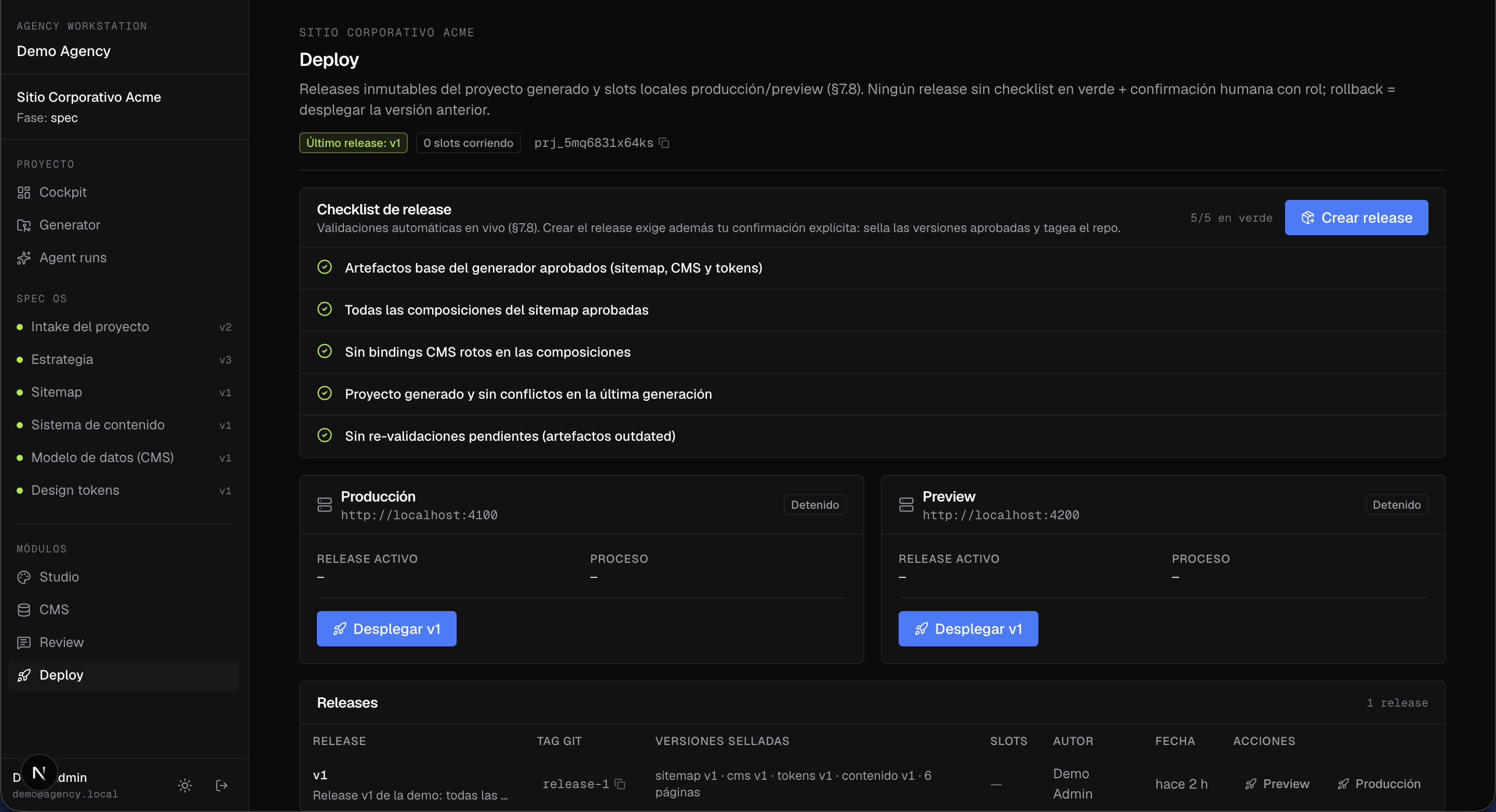
Releases freeze approved versions of critical inputs. Client review happens over a sealed version, through token links and actionable comments.
Local deploy works through production and preview slots, with immutable builds and rollback based on previous releases. The architecture can connect external providers behind the same contract.
Gallery